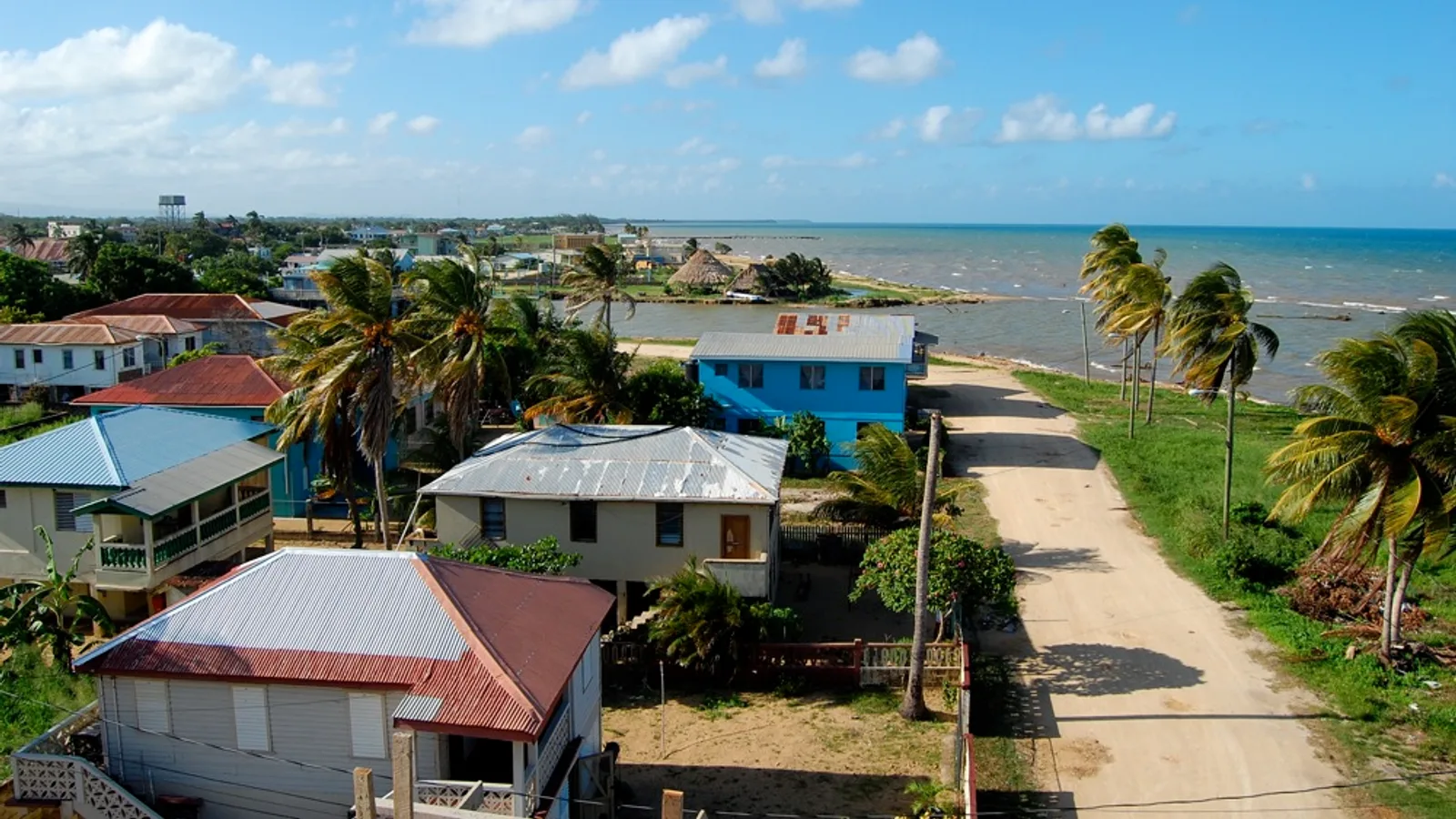
Most visitors treat Orange Walk Town as a name on a highway sign between Belize City and the Mexican border. That is a mistake. Orange Walk Town is the practical base for the whole northern half of the country: the New River runs past its edge, Lamanai is a boat ride upstream, the lagoons and Mennonite farm roads start a few minutes outside town, and the food after dark is some of the best in Belize. With your own vehicle you can stay two or three nights here and cover ground that day-trippers from the cayes never see.
This is sugar country. Cane fields run to the horizon, the mill at Tower Hill works through the harvest, and the town itself is busy, working and unfussy rather than scenic. That is part of the appeal. You are staying in a place that would exist whether or not tourists turned up.
Why base yourself in Orange Walk Town?
The short answer is distance. From Orange Walk you are roughly an hour and a half from Belize City, under an hour from Corozal, and within striking range of Crooked Tree, Honey Camp Lagoon, Shipyard, Blue Creek and the Rio Bravo country to the west. Nothing in the north is more than a morning away.
The longer answer is that the boat trips to Lamanai leave from the New River just south of town, usually early. Staying in or near Orange Walk means you are at the landing at the right hour without a pre-dawn drive from somewhere else.
Practical things to know before you commit to a few nights:
- Hotels in town range from simple guesthouses to mid-range places with secure parking. Ask about parking when you book — it matters more than the room.
- The central park comes alive in the evening with food stalls. Tacos, garnaches, panades and salbutes are the local standard.
- Banks, pharmacies, hardware stores, a supermarket and fuel are all here. Stock up before you head out to the smaller villages.
- Sundays are quiet. Plan your shopping and fuel for Saturday.
- Spanish is widely spoken alongside English, along with Mennonite Low German out in the farming settlements.
Driving to Orange Walk: the Philip Goldson Highway
The road north from Belize City is the Philip Goldson Highway, paved two-lane most of the way, with speed bumps through every village. It is an easy drive by Belize standards, but it has its own rhythm.
During the cane harvest, roughly the drier months from winter into early summer, the highway carries loaded cane trucks moving slowly and shedding stalks. Give them room, pass only when you can see well ahead, and expect the occasional stretch of cane debris on the asphalt. Milling season also means traffic clustered around the Tower Hill mill south of town.
From the international airport you are looking at a straightforward run north; from San Ignacio you will come east along the Western Highway and then north, which turns it into a half-day drive with stops. If you are making that crossing, the Belize Zoo and Guanacaste Park sit right on the Western Highway and break the journey nicely, and the Community Baboon Sanctuary at Bermudian Landing is a detour off the Burrell Boom road that puts you back on the northern highway afterwards.
If you are new to driving here, our general notes on entry formalities, licences, currency and road rules in Belize cover the basics. The headline rule: do not drive the highways after dark if you can avoid it. Unlit bicycles, dogs and unmarked speed bumps are the reason.
Lamanai and the New River boat trip
Lamanai sits on the west bank of the New River Lagoon, and the classic way in is by boat from the landing area near the Tower Hill bridge, south of Orange Walk. The run upriver takes well over an hour each way depending on the boat and how often the guide stops.
And they do stop. The New River is the point of the trip as much as the ruins are: snail kites, jacanas, herons, bats tucked under overhanging branches, crocodiles on the mud, howler monkeys in the trees near the landing. Bring binoculars even if you do not think of yourself as a birder.
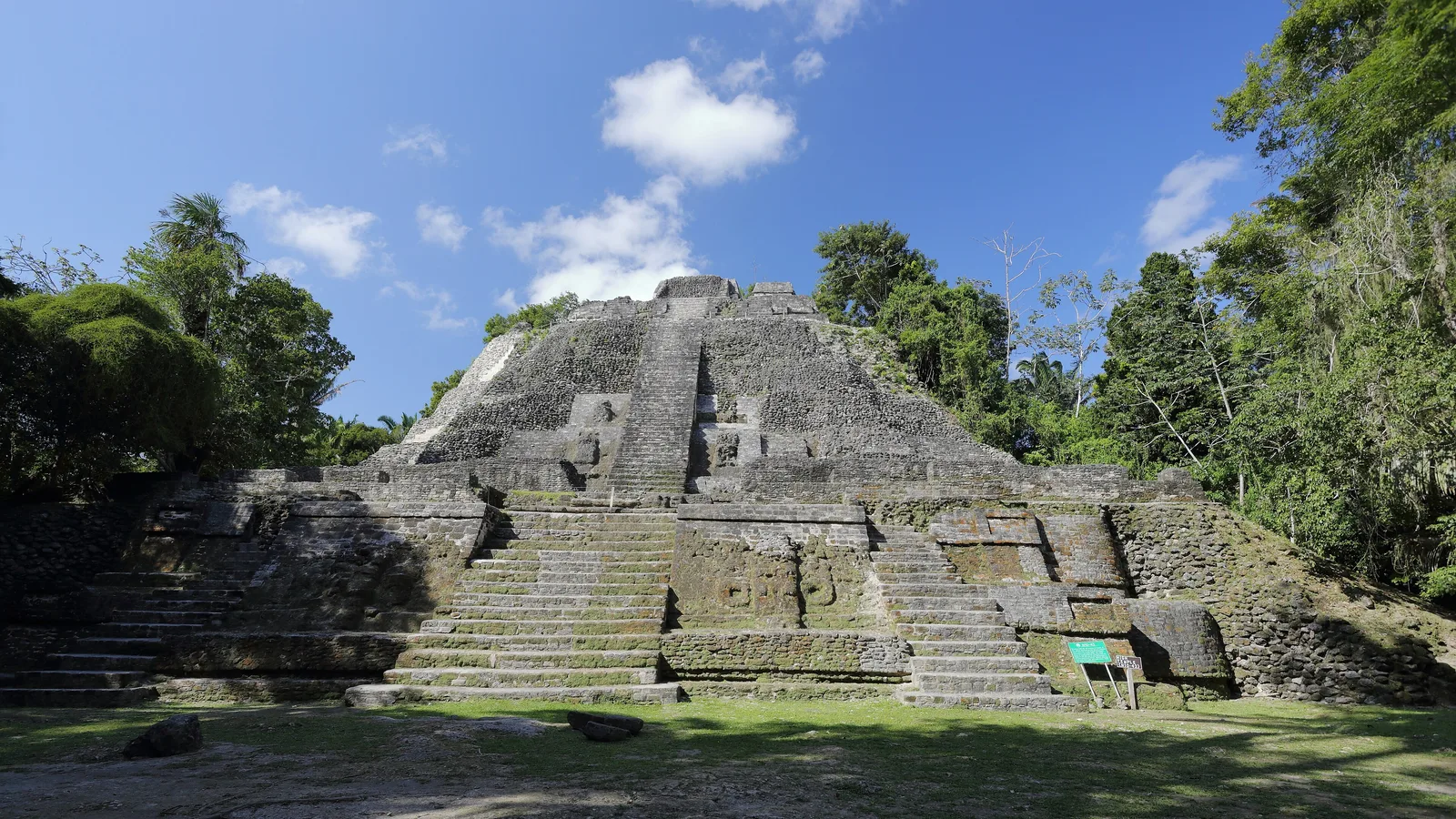
At the site, the Mask Temple, the Jaguar Temple and the High Temple are the three that most visitors climb or photograph, and the view from the High Temple over the lagoon is the one people remember. Lamanai was occupied for an extraordinarily long span, right through the Spanish arrival, and the ruined church and the nineteenth-century sugar mill in the forest nearby make that history unusually legible. Entrance fees are collected at the site — check the current rate, and confirm with your operator whether it is included in the boat price.
Book the boat through your hotel or a local operator the day before. We rent vehicles and do not sell tours or tickets, so arrange the trip directly with the people running it and ask where exactly to leave your vehicle.
Can you drive to Lamanai instead of taking the boat?
You can, and some people do. There is a land route running west and south from Orange Walk through San Felipe to Indian Church, the village beside the ruins. It is a long unpaved stretch and its condition swings with the weather: dusty and slow when dry, rutted and genuinely difficult after heavy rain.
If you want to try it, go in a high-clearance vehicle, go in the dry season, start early, ask locally about the current state of the road that morning, and accept that it may take considerably longer than the map suggests. Most visitors are better served by the boat, which is more enjoyable anyway. Where the drive makes sense is if you are staying out at Indian Church or continuing deeper into the Rio Bravo area.
What else is worth driving to from Orange Walk?
This is where having your own vehicle pays for itself. A few options, all comfortable day trips:
- Honey Camp Lagoon — a freshwater lagoon east of town on a mostly unpaved road, popular with locals at weekends for swimming and picnics.
- Crooked Tree Wildlife Sanctuary — south along the highway, then in along a causeway. One of the best birding spots in the country, especially in the dry months when the lagoons shrink and the jabiru storks gather.
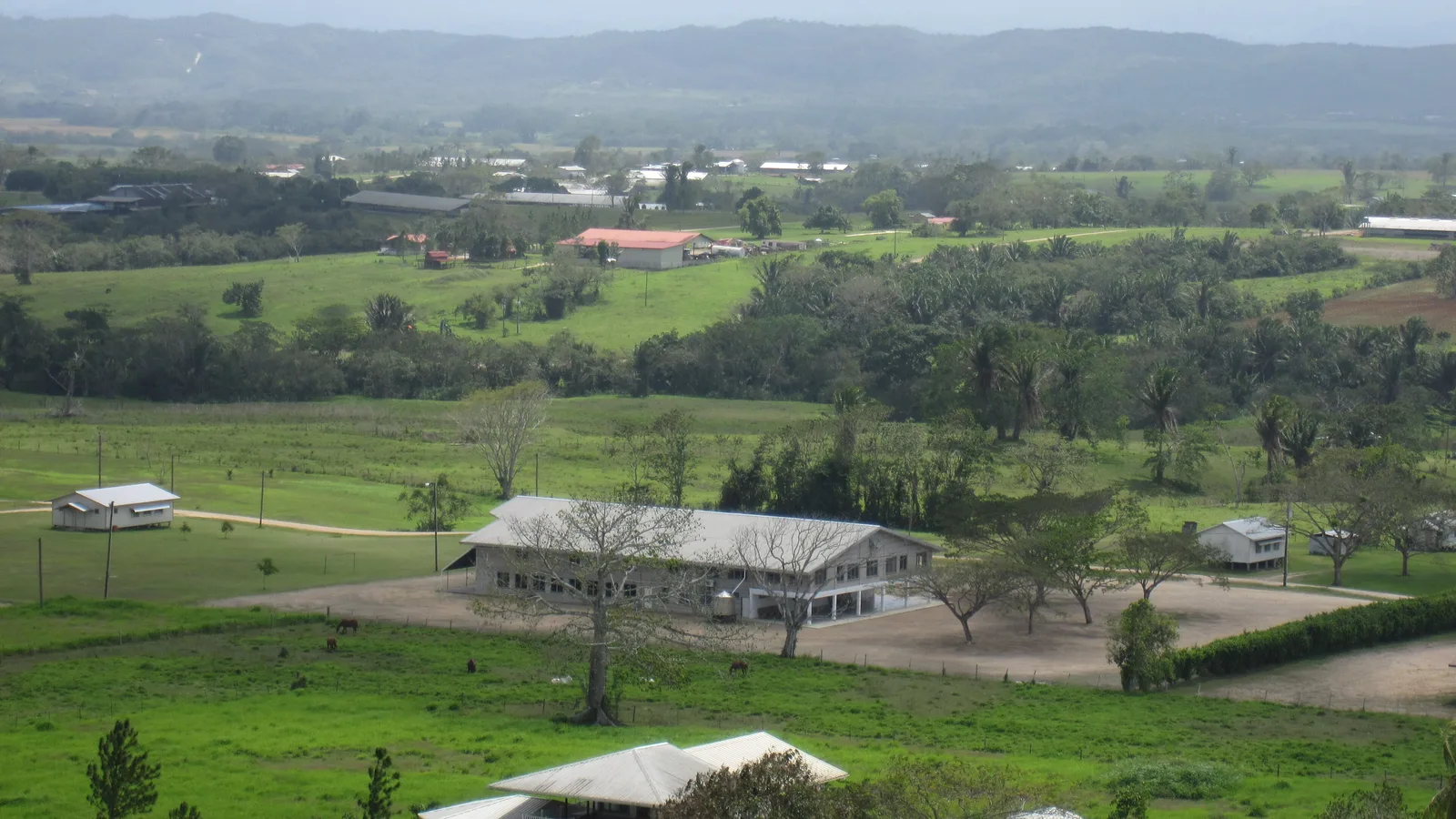
- Shipyard and Blue Creek — Mennonite farming settlements west of the highway, reached on wide gravel roads through sorghum and cane. Unvarnished, interesting and quiet on Sundays.
- Corozal Town and Cerros — under an hour north, a breezy bayside town with Maya ruins on the far shore of Corozal Bay.
- Sarteneja and Shipstern — a long drive east on rough road to a fishing village and a conservation area, for travellers with a full day and a tolerance for washboard.
What vehicle suits northern Belize?
The Philip Goldson Highway itself is fine in anything. The reason to take an SUV is everything branching off it: the Honey Camp road, the Crooked Tree causeway, the Mennonite gravel, and the Lamanai land route if you attempt it. Clearance and decent tyres matter more than four-wheel drive for most of these.
A mid-size SUV such as the 2017 Jeep Cherokee handles the mix well, with room for luggage and binoculars and enough ground clearance for the farm roads. Larger groups should look at the seven- and eight-seat options and the van across the rest of our fleet. All rentals include third-party insurance and unlimited mileage within Belize, which suits a region where you will rack up kilometres on short, scattered trips.
We deliver and collect anywhere in the country, Orange Walk included, so you can pick up at the international airport and drive straight north, or have a vehicle waiting in town. Our contact details and office hours are the fastest way to sort the logistics.
Plan for
- Binoculars and a hat for the boat — there is sun on the river even when the morning starts grey
- Insect repellent, especially around the lagoons at dawn and dusk
- Cash in Belize dollars for entrance fees, village shops and food stalls
- A dry bag or plastic sleeve for phones and cameras on the New River
- A full tank before heading to Blue Creek, Sarteneja or Indian Church
- Closed shoes with grip if you plan to climb at Lamanai
Fitting it into a longer trip
Two nights in Orange Walk is the sweet spot: one full day for Lamanai, one for Crooked Tree or the Mennonite country, with evenings in town for the food. Add a third if you want Corozal and Cerros, or if you are crossing into Mexico afterwards.
Coming from the west, Orange Walk also pairs naturally with a few days in Cayo — you can break the drive at the zoo or the baboon sanctuary and still arrive before dark.
When you have your dates, send us a reservation request. There is no online payment and no booking fee — our family checks availability and confirms the price with you by phone or email, and we will tell you honestly which vehicle suits the roads you are planning to drive.
Frequently asked questions
How do you get from Orange Walk Town to Lamanai?
The usual way is by boat up the New River from a landing south of Orange Walk, near the Tower Hill bridge. The trip takes well over an hour each way and is a wildlife outing in itself, with stops for birds, crocodiles and howler monkeys. There is also a long unpaved land route via San Felipe and Indian Church, but it is slow and weather-dependent. Boat trips are arranged with local operators or through your hotel.
Do you need a four-wheel drive to explore northern Belize?
Not for the Philip Goldson Highway, which is paved the whole way to the border. You will want a high-clearance SUV for the roads that branch off it, such as Honey Camp Lagoon, the Mennonite settlements and the land route toward Lamanai, particularly after rain. Clearance and good tyres matter more than four-wheel drive for most of these trips.
Can Cayo Auto Rentals deliver a vehicle to Orange Walk?
Yes. Pick-up and drop-off are available anywhere in Belize, including Orange Walk, Corozal, Belize City and the international airport at Ladyville. Send a reservation request with your dates and preferred location and the family will confirm availability and price by phone or email. There is no online payment and no booking fee.
How many nights should you spend in Orange Walk Town?
Two nights suits most travellers: one full day for Lamanai and the New River, and one for Crooked Tree Wildlife Sanctuary or the Mennonite farming country west of the highway. Add a third night if you want to see Corozal and Cerros, or if you are continuing into Mexico afterwards.