Barton Creek Cave is one of the few places in Belize where you visit an ancient Maya ceremonial site lying down in a canoe, torch in hand, with a river running underneath you. There is no hiking, no climbing and no swimming involved. You paddle in through a wide limestone mouth, the daylight thins out behind you, and your guide starts picking out ledges above the waterline where pots and bones were left more than a thousand years ago.
It is also, usefully, one of the easier cave trips in Cayo to do on your own schedule. Unlike some sites that require a booked tour from town, Barton Creek is a place you can drive to, pay at the entrance, and get on the water. The catch is the last stretch of road, which we will get to.
What is Barton Creek Cave?
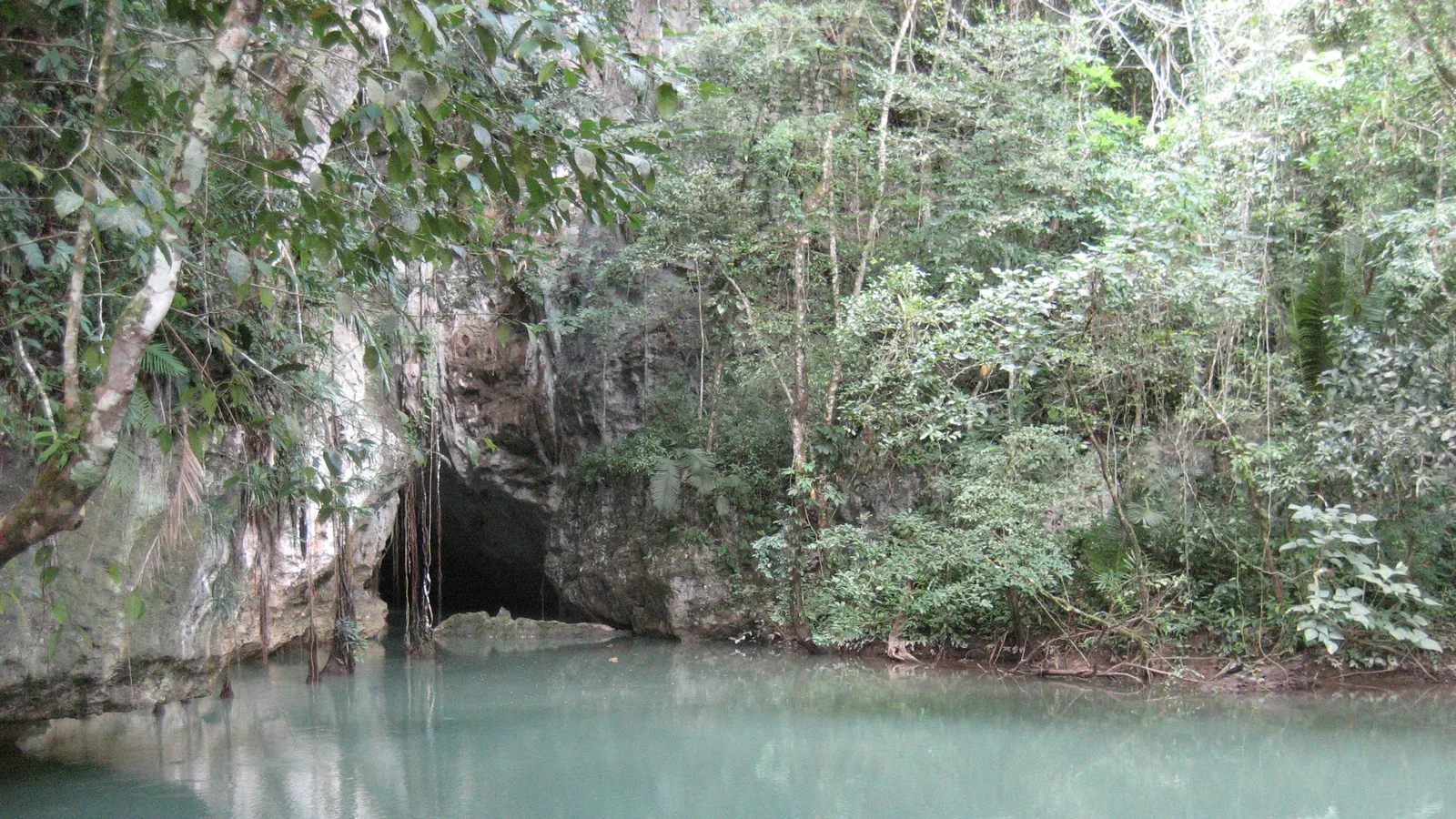
The cave sits in the limestone hills south of the Western Highway, in the heart of Cayo District. Barton Creek itself flows straight through the mountain, which is why the only way in is by boat. The passage is navigable for roughly a kilometre or so before a low ceiling or shallow water turns canoes around, depending on the season and water level.
The ancient Maya used it as a ceremonial space rather than a dwelling. Archaeologists have recorded ceramics, stone tools and human remains on the dry ledges and alcoves above the creek, placed there deliberately and left undisturbed. Nothing is behind glass. Your guide shines a spotlight up, and you look at what is actually there.
What will I see inside the cave?
Expect the trip to be slow and quiet rather than dramatic. Highlights usually include:
- Huge flowstone formations and cathedral-sized chambers where the ceiling lifts well above the canoe
- Stalactites hanging low enough in places that everyone ducks
- Ledges holding pottery fragments and, in several spots, visible skeletal remains
- Bats, and the occasional freshwater creature in the clear water below you
- Total darkness once the guide switches off the lamps, which most people find worth the whole drive
Canoes and a guide are arranged at the site, and life jackets are standard. Entrance and canoe fees are collected at the entrance — rates change, so confirm the current cost when you arrive or by asking your hotel in San Ignacio. Plan on roughly an hour on the water for the standard trip, though this varies by operator and by how chatty your guide is.
This is a good option for travellers who want a cave experience without the physical demands of a site like ATM, which involves swimming, wading and scrambling. Barton Creek works for older visitors, younger children with supervision, and anyone who would rather stay dry.
The drive from San Ignacio
From San Ignacio you head east on the Western Highway towards Belmopan. The turning most people use is at Georgeville, where the Chiquibul Road — the same road that climbs into the Mountain Pine Ridge — runs south off the highway. A few miles down, a signed turn-off heads east towards Barton Creek and the Mennonite settlements beyond it.
There is a second approach through Cristo Rey and San Antonio village if you are already on that side, but the Georgeville route is the one most visitors find straightforward. Either way, it is roughly 45 minutes to an hour from San Ignacio, depending on the state of the gravel and how often you stop.
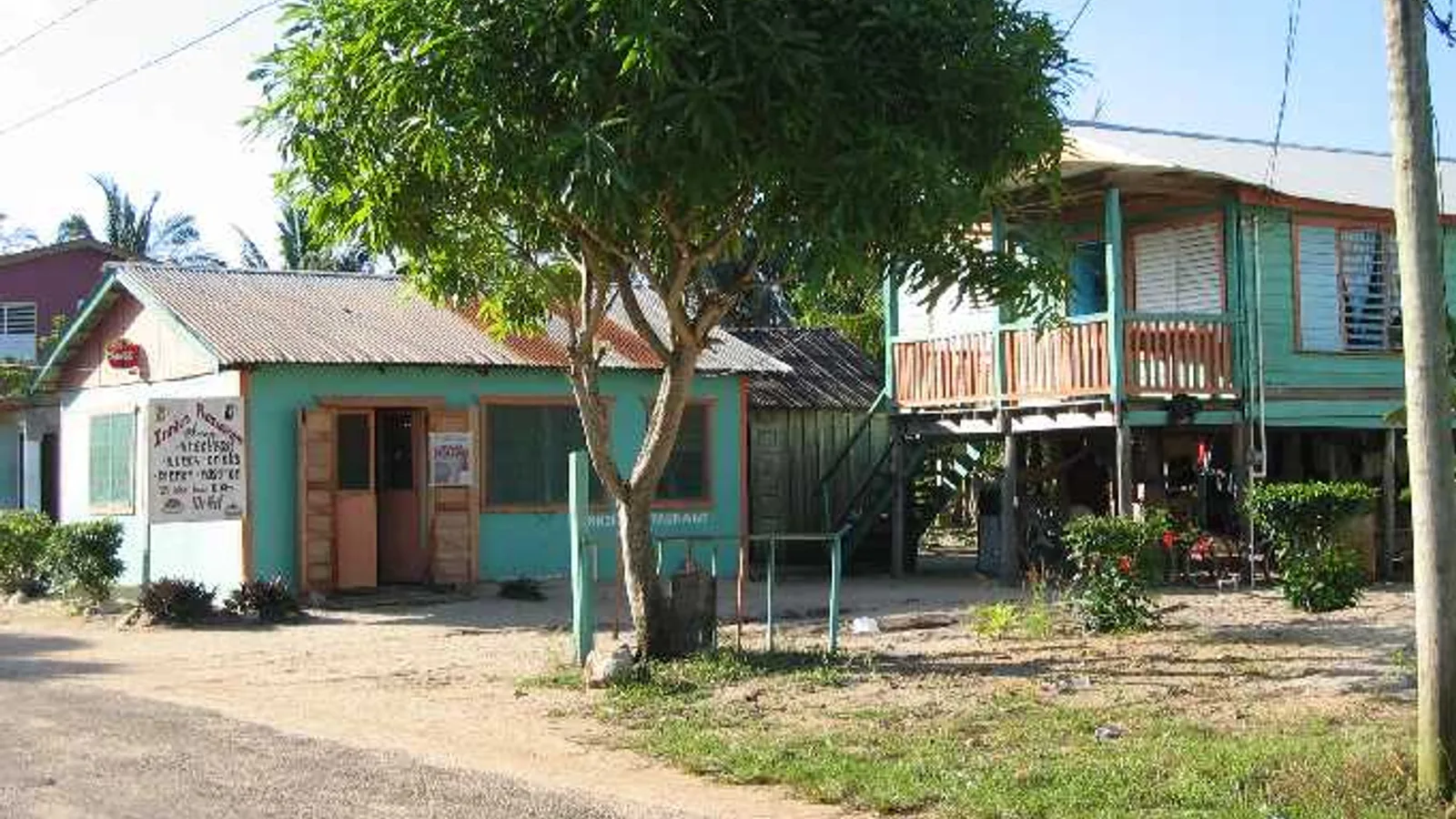
This is farmland country. The flat, mechanised fields and tidy workshops around Spanish Lookout, on the north side of the Belize River, are the commercial Mennonite heartland of Belize — a worthwhile detour in its own right for fuel, hardware, a decent supermarket and some of the best cheese and ice cream in the country. The communities nearer Barton Creek are the traditional ones: horse-drawn buggies, no power lines, farming done by hand. Drive slowly and give buggies plenty of room. They are quiet and you will come on them faster than you expect.
Is the road to Barton Creek Cave paved?
Partly. The Western Highway is sealed, the first part of the Chiquibul Road is usually in reasonable shape, and then you are on limestone gravel for the final run in to the cave. Typical conditions are washboard ruts, loose white stone, some steep little pitches, and potholes that deepen as the dry season wears on.
There is also a shallow creek crossing on the approach. In normal conditions it is unremarkable. After heavy rain it can rise quickly, and in the wet season the access road turns slick and rutted. If it has been pouring for a day or two, ask in town or call the site before committing to the drive.
What kind of vehicle do you need?
A small saloon car will often make it in dry weather, slowly and with a lot of wincing. We would not recommend it. Ground clearance is what matters here — enough height to cross the creek without scraping, and enough suspension travel to take washboard at a sensible speed instead of crawling.
An SUV is the sensible choice, and it is what most of our guests take for this part of Cayo. The 2017 Jeep Cherokee handles the gravel comfortably and still rides well on the highway run back to the coast. If you are a bigger group, or you want to combine the cave with a longer day in the hills, have a look at the full fleet of SUVs and vans and tell us what the trip looks like — we will suggest what fits.
Two practical notes. Fuel up in San Ignacio, Santa Elena or Spanish Lookout before you head south; there is nothing near the cave. And mobile signal comes and goes once you leave the highway, so download your map offline before you go.
Plan for
- Quick-dry clothes and shoes you do not mind getting muddy at the launch
- A head torch, even though guides carry lamps — it makes the ledges easier to study
- Drinking water and snacks; there is little on sale at the site
- Cash in Belize dollars for entrance and canoe fees
- A dry bag or ziplock for phones and cameras, because canoes and water are canoes and water
- Insect repellent for the riverbank, and sun protection for the open stretch at the entrance
Making a day of it in Cayo
Because the turn-off shares a road with the Mountain Pine Ridge, Barton Creek pairs naturally with a self-drive day up to Big Rock Falls and Rio Frio Cave if you start early. It also sits comfortably in a loop with Xunantunich and the hand-cranked ferry at San Jose Succotz on the other side of San Ignacio, though that is a full day rather than a half.
If this is your first drive in Belize, our practical notes on entry, driving and currency cover the things worth knowing before you pick up the keys — speed bumps in every village, the right-hand-drive rules, and what to do at a police checkpoint.
When you are ready, send us a reservation request with your dates and the number of seats you need. We are a family business in San Ignacio, we will confirm availability and price by phone or email, and we can have the vehicle waiting at the airport or at your hotel door.
Frequently asked questions
Can you visit Barton Creek Cave without a tour from San Ignacio?
Yes. Many visitors drive themselves to the site and arrange a canoe and guide on arrival, since the cave can only be entered by boat with a guide. Entrance and canoe fees are collected at the site, so bring Belize dollars in cash and check the current rates when you get there. Arriving under your own steam means you set the timing rather than a tour schedule.
What kind of vehicle do I need to drive to Barton Creek Cave?
The last stretch is limestone gravel with washboard, potholes and a shallow creek crossing, so ground clearance makes a real difference. An SUV such as a Jeep Cherokee or a Ford Explorer is a comfortable choice and handles both the gravel and the highway run. A low saloon car can usually manage in dry conditions but it is slow and uncomfortable, and conditions worsen after heavy rain.
Do you have to swim at Barton Creek Cave?
No. The entire trip is done sitting in a canoe, with life jackets provided and a guide paddling. You may get your feet wet at the launch point, but there is no swimming, wading or climbing involved, which makes it one of the more accessible cave experiences in Cayo.
How long does the drive take from San Ignacio to Barton Creek Cave?
Allow roughly 45 minutes to an hour each way from San Ignacio, depending on the condition of the gravel road and whether you stop along the way. Fuel up before you leave town, as there are no stations near the cave, and download your map offline because mobile coverage is patchy once you turn off the Western Highway.