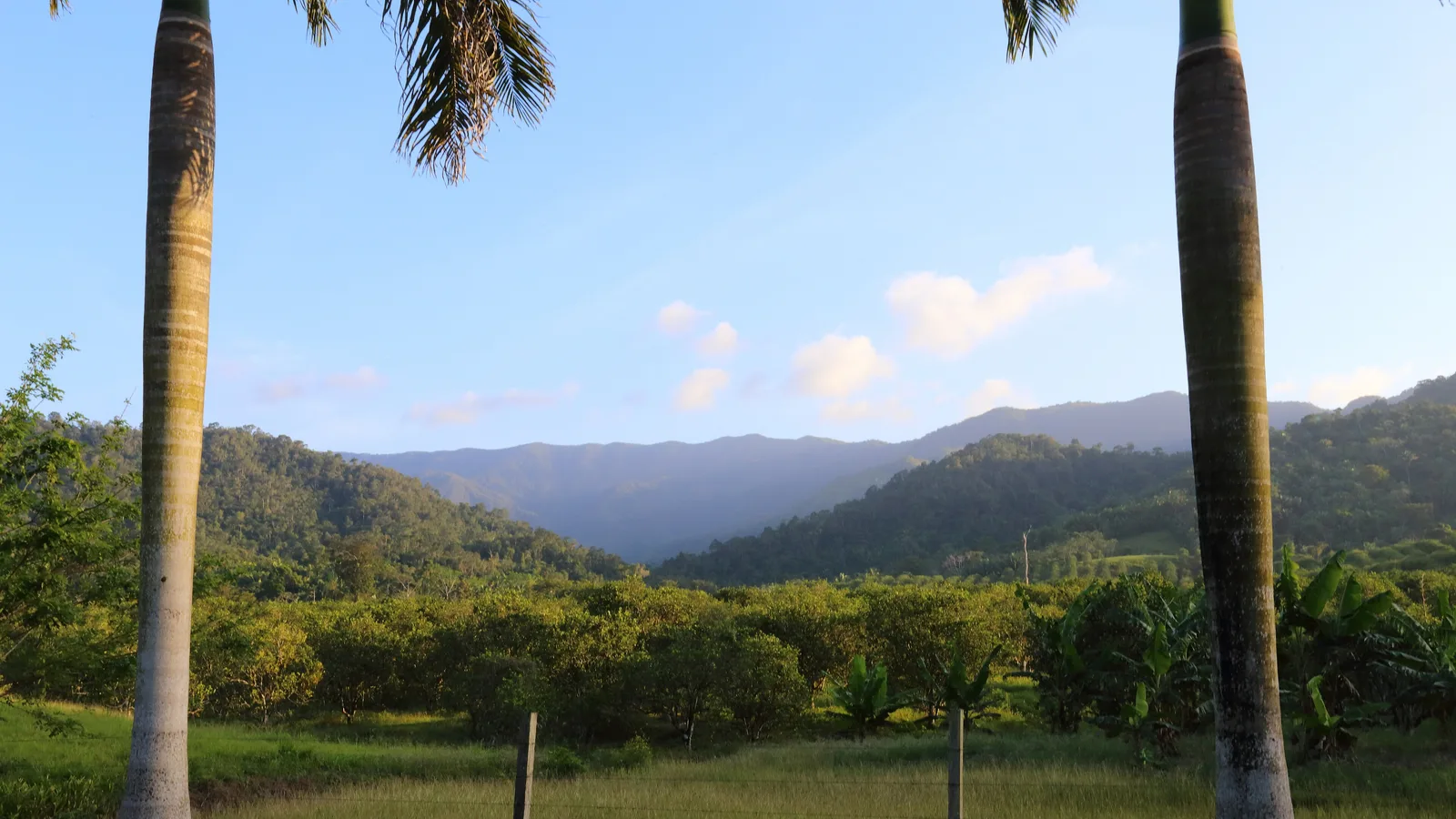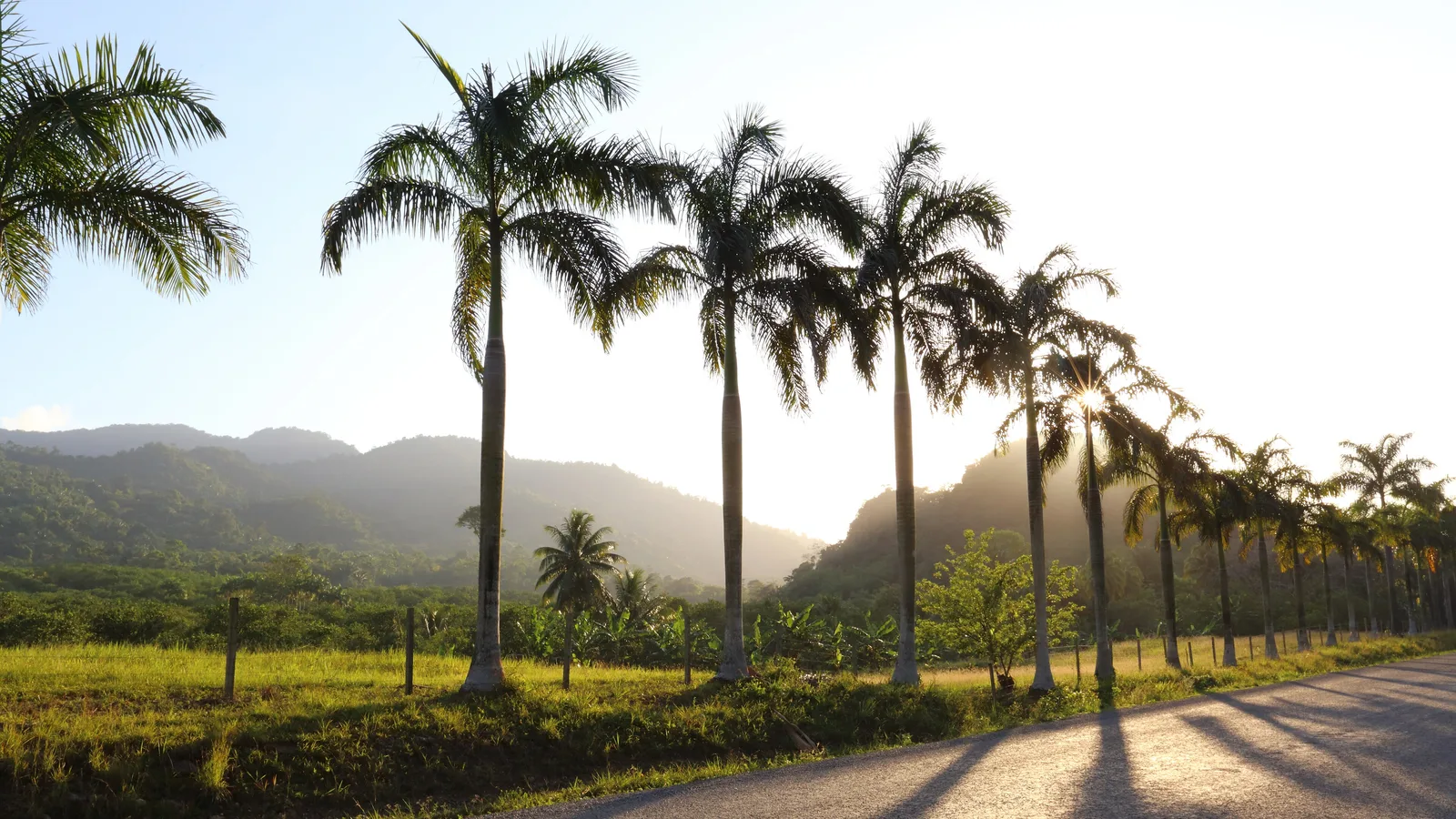
Ask any Belizean driver for one piece of advice and you will usually hear the same thing: finish your drive before sunset. Night driving in Belize is not forbidden, and plenty of people do it, but the risk profile changes completely once the light goes. The highways are unlit, the shoulders are soft or non-existent, and the things most likely to be in your lane after dark — a cow, a cyclist with no reflector, an unpainted speed bump — are the hardest things to see.
This guide explains what actually makes after-dark travel awkward here, and more usefully, how to build an itinerary where you simply never need to do it.
Why is night driving in Belize riskier than it looks?
It is not about crime, and it is not about the state of the pavement. Belize's main highways are, for the most part, decent two-lane roads. The problem is everything that shares them.
Unlit highways and no hard shoulder
Outside town limits there is essentially no street lighting. Once you leave Belmopan, San Ignacio, Dangriga or Orange Walk, your headlights are the only light source, and oncoming high beams wipe out your night vision for several seconds at a time. Many stretches also drop off sharply at the edge of the asphalt into grass, drainage or a ditch, so there is nowhere forgiving to swerve.
Livestock, dogs and wildlife on the road
Cattle, horses and the occasional pig graze on roadside verges and wander onto the warm asphalt at night. Dogs cross without hesitating. On the Hummingbird and Southern Highways you can add armadillos, opossums, foxes and, rarely, something much larger. A dark cow standing broadside in an unlit lane is close to invisible until you are on top of it.
Cyclists and pedestrians
Bicycles are everyday transport in Belize, and many have no lights and no reflectors. People walk along the edge of the highway between villages, often in dark clothing, and it is normal to see groups walking home after a football match or a church service. They are not doing anything unusual — you are simply the one who has to see them.
Speed bumps, or "sleeping policemen"
This is the one that catches visitors most often. Villages along every major highway use speed bumps to slow traffic, and while many are painted and signposted, some are faded, unpainted or placed just past a bend. Hitting one at highway speed in the dark is how rental cars lose suspension components and tyres. In daylight you read the road ahead and the slowing traffic in front of you. At night you get much less warning. Our wider walkthrough of Belize road rules, roundabouts and speed bumps covers how these are marked and what the local driving conventions are.
What time does it get dark in Belize?
Belize sits close to the tropics and does not observe daylight saving, so the day length is fairly steady year-round. Sunset falls somewhere around 5:20–5:40 PM in December and January, and somewhere around 6:30 PM in June. Twilight is short — you get perhaps twenty to thirty usable minutes after the sun drops, not the long dusk you may be used to further north.
The practical takeaway: in winter you should be planning to arrive at your accommodation by about 5:00 PM, and in summer by about 6:00 PM. Build your day around that deadline rather than treating it as a nice-to-have.
Rain changes the maths again. In the wet months a late afternoon downpour can make it feel like dusk by 4:00 PM, and standing water hides potholes. If you are travelling between June and November, read our notes on driving Belize in the rainy season alongside this one.
Timing your arrival flight and your first drive
Most visitors meet their first Belizean road straight off a plane at Philip Goldson International, which is a genuinely easy drive west in daylight and a much less relaxing one in the dark when you are tired, unfamiliar with the car and navigating Belize City's approaches for the first time.
A few rules of thumb:
- An arrival before about 2:00 PM leaves you comfortable time to reach San Ignacio, Hopkins, Placencia or Corozal in daylight.
- An arrival between 2:00 and 4:00 PM is fine for Belmopan, San Ignacio or Belize City, but tight for anywhere south.
- An arrival after about 4:00 PM, especially in winter, is a strong argument for sleeping near the airport or in Belize City and starting fresh in the morning.
- Flights get delayed. Build in a buffer rather than planning to the minute.
Our airport pickup and drive west guide walks through that first leg in detail. Note also that the Cayo Auto Rentals office runs 8:00 AM to 6:00 PM Monday to Saturday and is closed Sundays — if your flight lands late or on a Sunday, tell the family when you send your request so the handover can be arranged sensibly rather than rushed.
Ferries, border posts and other daylight-only links
Several useful links in the Belizean road network only work in daylight, and they are easy to overlook when you are plotting a route on a map at home.
The hand-cranked ferry across the Mopan River at San José Succotz, used to reach Xunantunich, runs during daytime hours only and the site itself closes in the afternoon. The same applies to the river ferries used on routes like Bermudian Landing and the northern back roads. Hours are not always posted and can change with river levels, so confirm locally on the day rather than relying on anything you read online, including here.
Land border crossings and most attraction gates also close well before dark. If your plan involves a ferry, a border or a park gate, treat the closing time as your real deadline and work backwards from it.
Planning long southern drives
The drives that most often push people into darkness are the long southern runs: Belize City or Cayo down to Hopkins, Placencia or Punta Gorda. The route over the Hummingbird Highway is beautiful, curving and hilly, with blind bends through the Maya Mountains foothills — lovely at 10:00 AM, demanding at 7:00 PM. The Southern Highway beyond Dangriga is long, quiet and very dark, and the Placencia peninsula road has its own crop of speed bumps and pedestrians.
For those legs, leave in the morning. If you are heading to Toledo for something like a cacao farm visit around Punta Gorda, plan it as a full travel day and do not try to tack a four-hour drive onto an afternoon of activities.
Plan for a daylight day
- Leave by 9:00 AM for any drive over three hours
- Keep the fuel tank above half; stations in rural areas close early
- Download offline maps — mobile signal drops in the hills and the far south
- Carry water, snacks and a torch in the vehicle, not in the boot under luggage
- Agree a "turn around or stop" time with whoever you are travelling with
If you do end up out after dark
Sometimes a plan slips. If you are still driving when the light goes, slow down well below the speed you would use in daylight, increase your following distance, and dip your beams early for oncoming traffic. Expect a speed bump at every village sign, whether or not you can see one. Give cyclists an enormous margin. If the weather turns heavy, pull into a lit area in a town and wait it out rather than pressing on.
If something does go wrong — a flat, a bump taken too hard, a vehicle that will not start — Cayo Auto Rentals also runs towing and recovery services, and the family is reachable by phone or WhatsApp.
Which vehicle makes the difference
Ground clearance matters more than horsepower here. A higher-riding SUV gives you a better view over traffic, more tolerance for a speed bump you did not spot in time, and a calmer ride on the rougher village approaches. Something like the 2017 Jeep Cherokee suits couples and small families well, and the rest of the SUV and van fleet covers larger groups. All rentals include third-party insurance and unlimited mileage within Belize, and if it is your first trip, the practical Belize travel page covers entry, currency and licence questions before you arrive.
Plan your days to finish in daylight and Belize drives beautifully. When you are ready, send the family a reservation request with your flight times and they will sort the handover around them.
Frequently asked questions
Is it safe to drive in Belize at night?
It is legal and people do it, but the risk is noticeably higher than in daylight. Highways outside towns have no street lighting, no hard shoulder, and regularly carry livestock, dogs, unlit cyclists and pedestrians. Unpainted speed bumps in villages are also much harder to spot after dark, so most drivers plan to be parked before sunset.
What time does it get dark in Belize?
Belize does not use daylight saving, so day length stays fairly consistent. Sunset is roughly 5:20 to 5:40 PM in December and January and around 6:30 PM in June, with only a short twilight afterwards. Aim to reach your accommodation by about 5:00 PM in winter and 6:00 PM in summer, earlier if rain is forecast.
Do the river ferries in Belize run after dark?
No. The hand-cranked river ferries, including the Mopan River crossing at San José Succotz for Xunantunich, operate during daytime hours only, and times can vary with river conditions. Confirm the current schedule locally on the day you travel and treat the last crossing as your deadline.
What if my flight lands in Belize late in the evening?
If you arrive after about 4:00 PM, especially between November and February, it is usually wiser to stay near the airport or in Belize City and start driving in the morning. Cayo Auto Rentals is open 8:00 AM to 6:00 PM Monday to Saturday and closed Sundays, so mention your flight details in your reservation request and the family will arrange the handover around them.