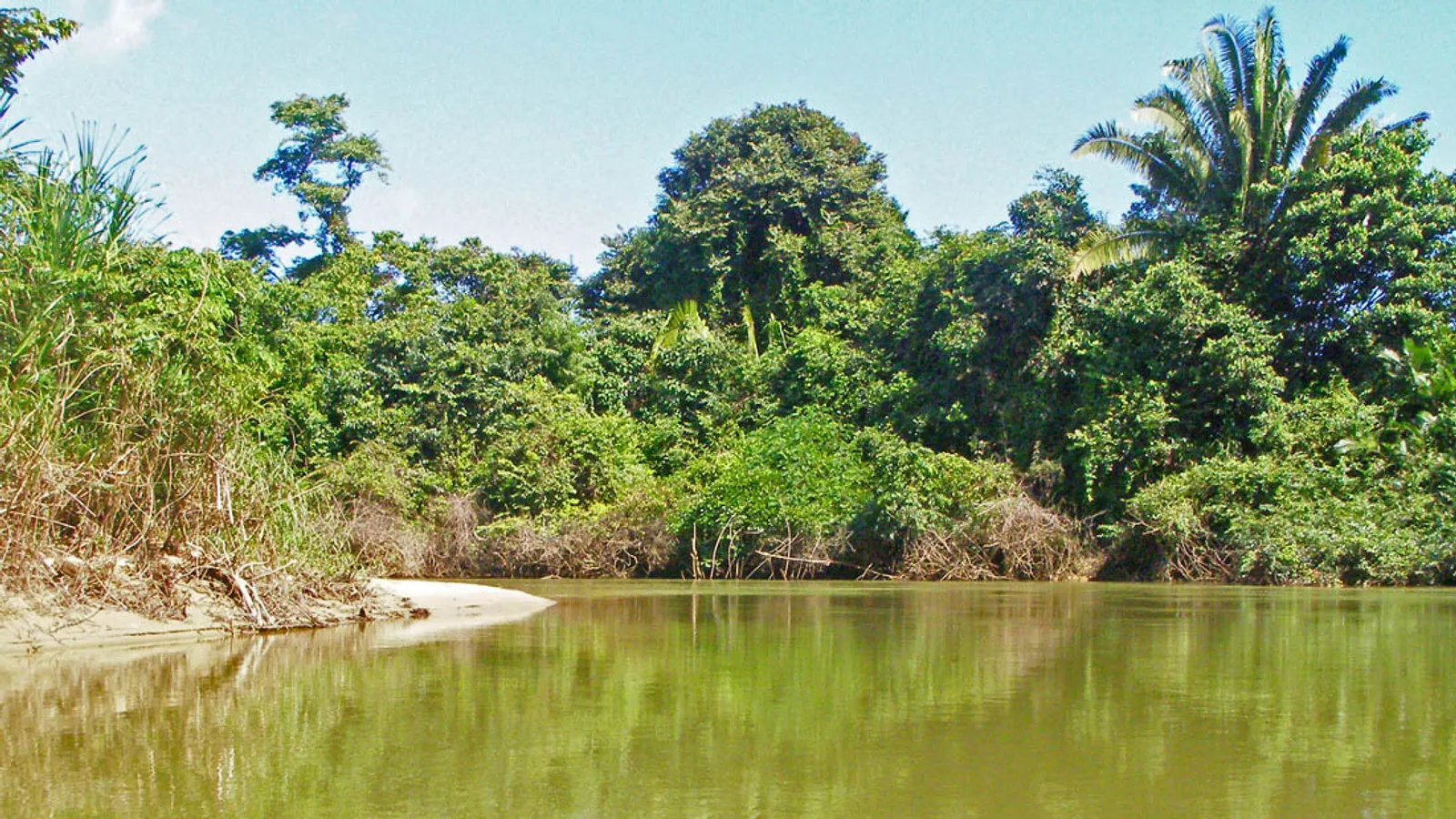
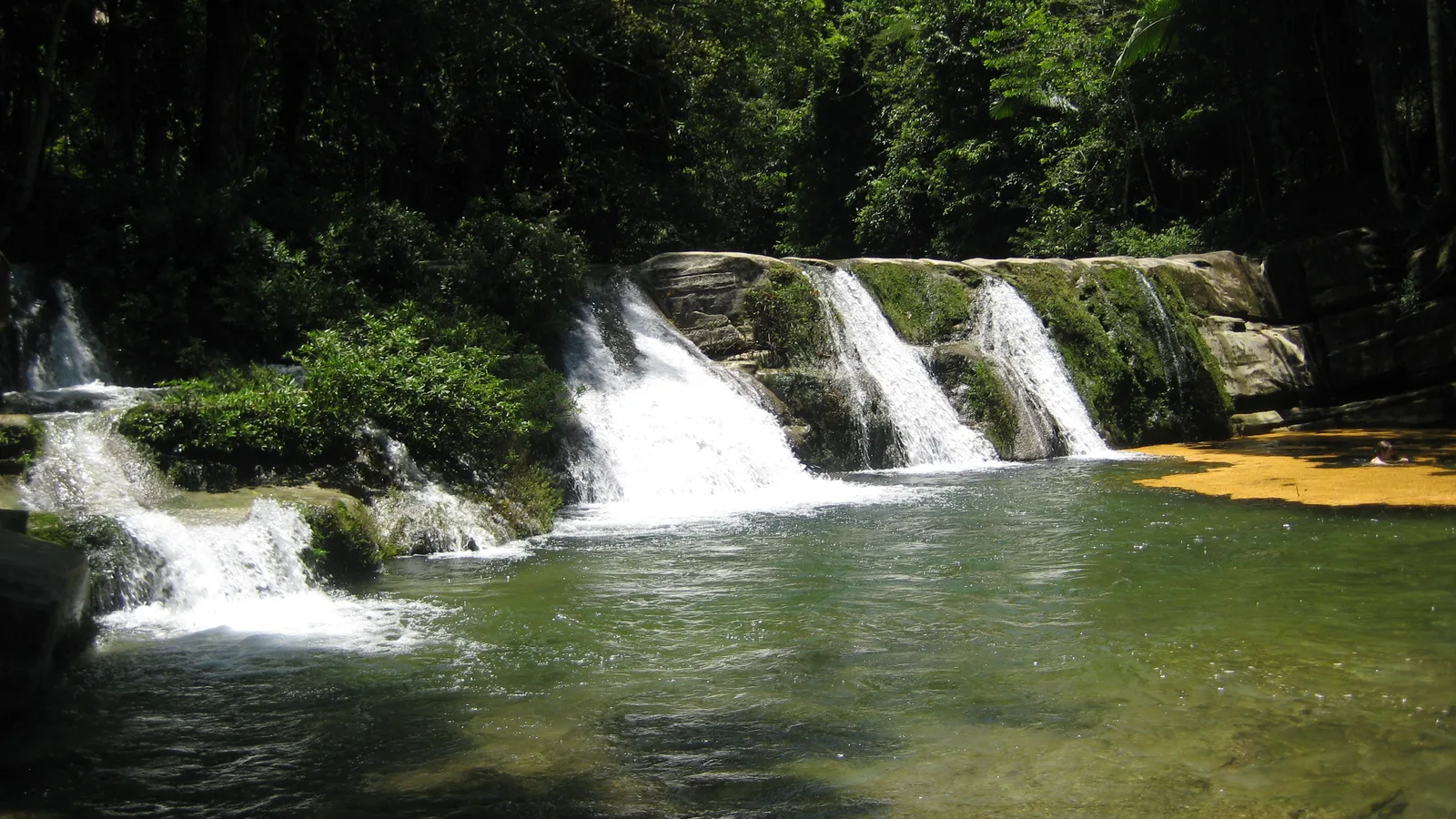
Rio Blanco National Park sits in the hills of western Toledo District, about as far south and west as a rental car will comfortably take you in Belize. It is small by national park standards, protecting a stretch of the Rio Blanco river and a short, broad waterfall that drops into a deep green pool. People come for one thing above all: a swim under the falls, in cool water, with almost nobody else around on a weekday.
Getting there is the interesting part. There is no shuttle, no tour bus circuit and no realistic public transport option that leaves you time to actually enjoy the place. This is a drive, through Maya villages and cacao country, and that is a big part of why it stays quiet.
Where is Rio Blanco National Park?
The park lies near the villages of Santa Elena and Santa Cruz, inland from Punta Gorda, along the road that runs west from the Southern Highway towards San Antonio and eventually the Guatemalan border at Jalacte. It is co-managed with the surrounding Maya communities, and the people you meet at the entrance are generally from those villages.
From Punta Gorda, allow somewhere around an hour to an hour and a half, depending on how often you stop and what the road is doing. From Placencia or Hopkins it is a long half-day each way, so most travellers base themselves in Toledo for a night or two rather than attempting it as a single push. From San Ignacio it is a full day's drive down the Hummingbird and Southern Highways, which is why the south tends to be its own trip rather than an add-on.
What is the drive to Rio Blanco like?
The Southern Highway leg
The Southern Highway runs down the spine of southern Belize and is paved for its length. It is a good road by Belizean standards, but it is also a working road: expect cattle, cyclists, speed bumps through every village and the occasional stretch of patching or roadworks. Drive it in daylight. Unlit sections, loose dogs and unmarked bumps make night driving in the south genuinely unpleasant.
Somewhere north of Punta Gorda you turn west at the junction locals still call the Dump, onto the San Antonio Road. This is the artery that serves the inland villages.
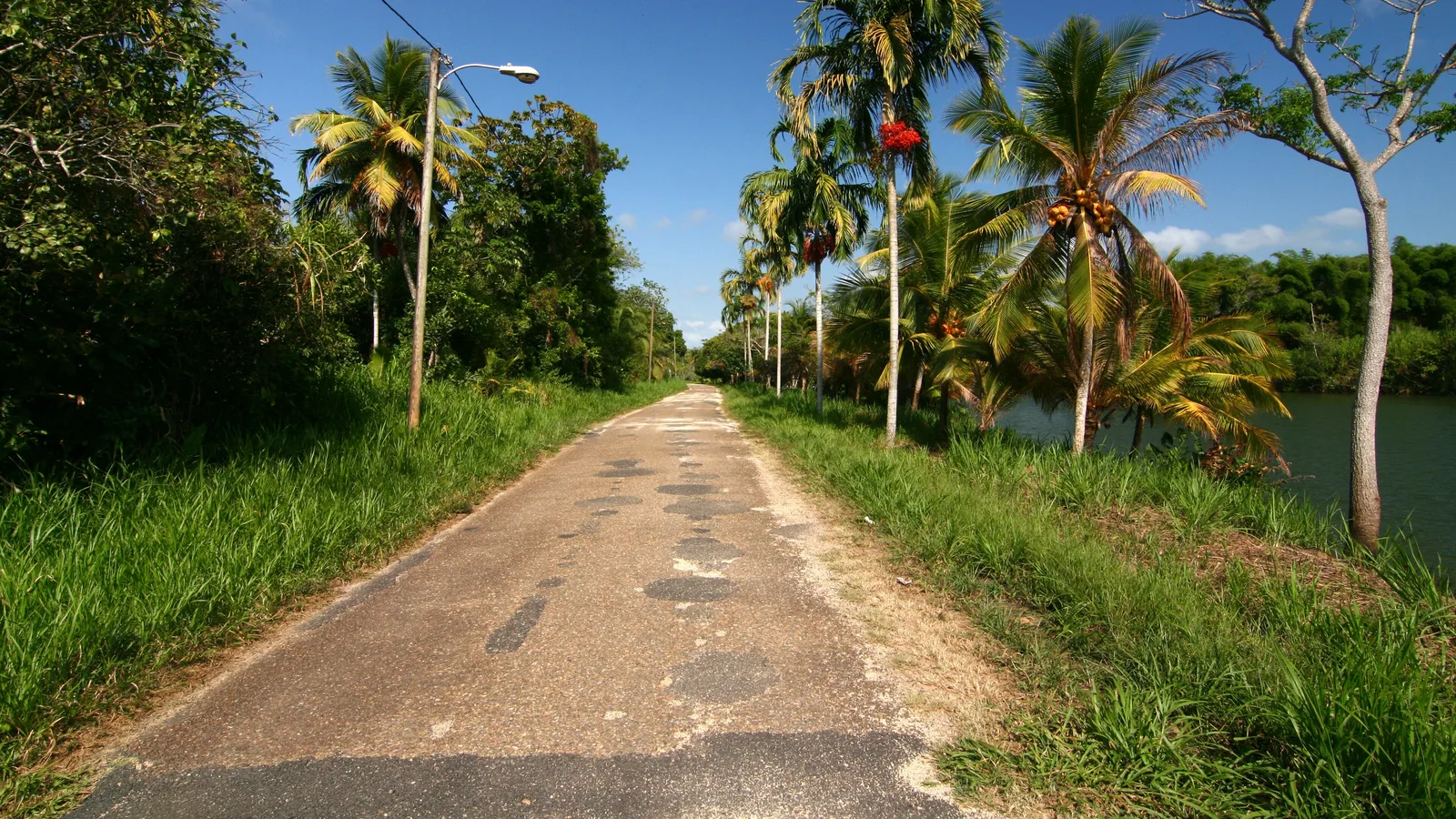
The village road to Santa Elena
The San Antonio Road has been substantially improved in recent years as part of the route towards the Jalacte border crossing, and much of it is now sealed. That said, road quality in Toledo changes with the weather and the works programme, so treat any description as typical rather than guaranteed. Expect a mix of good pavement, patched sections and, after heavy rain, some soft edges and run-off where the hills shed water.
The last approach to the park entrance is a short village track. In dry weather an ordinary car will manage it. After a wet spell, the clearance and the better tyres of an SUV are the difference between arriving relaxed and arriving worried. This is hill country and it rains more here than anywhere else in Belize.
A few things worth knowing before you set out:
- Fuel up in Punta Gorda. Stations inland are sparse and village shops do not sell fuel reliably.
- Mobile signal is patchy once you leave the highway. Download your offline map before the turn-off.
- Toledo gets the heaviest rainfall in the country. A dry morning in Punta Gorda does not mean a dry afternoon in the hills.
- Drive slowly through villages. Children, chickens and dogs use the road as much as vehicles do.
- Carry small Belize dollar notes for entrance and any local guiding. Cards are not an option out here.
The waterfall and the swimming hole
From the entrance area, a short forest trail drops down to the river. It is not a long walk, but it is a descent on steps and roots, and it will be slick after rain. Hold the rail where there is one.
The falls themselves are wide rather than tall, pouring over a rock lip into a pool that is deep enough to jump into from the ledges at the side. Locals do jump. Whether you should depends on the water level and your own judgement, and the safest approach is to ask whoever is at the visitor area about conditions on the day. Depth and current change with rainfall.
The water is cool and clear-green, framed by limestone and forest. Mornings are quietest. Weekends can bring families from nearby villages, which is pleasant in its own way but less solitary.
Facilities are basic and community-run. There is an entrance fee collected at the visitor area, and it supports the villages that manage the park, so check the current rate when you arrive rather than relying on anything printed online. Hours are daylight hours in practice; do not plan to arrive late in the afternoon.
What should I bring to Rio Blanco?
Plan for a half day at the park and pack as though there are no shops, because there effectively are not.
- Swimwear you can change into, plus a quick-dry towel
- Water shoes or sandals with grip for wet rock
- Drinking water and a packed lunch or snacks
- Insect repellent, especially late in the day
- A dry bag or waterproof pouch for phone and keys
- Cash in small notes
- A change of clothes to drive home in
Leave nothing visible in the vehicle. That is standard sense anywhere, not a comment on Toledo.
What else is nearby?
The same road serves several other stops, which is what makes the drive worth the fuel. Uxbenka, a hilltop Maya site with stelae and long views over the Toledo hills, is close to Santa Cruz. San Antonio village has a notable stone church. Blue Creek and its cave system lie off a branch road, and the cacao farms and chocolate makers of the district are scattered through the area. A single day with your own vehicle can take in two or three of these; a tour will usually give you one.
If you are working your way south along the coast first, our guide to Cockscomb Basin Wildlife Sanctuary covers the jaguar preserve and its waterfall trails, and the Hopkins road guide explains the turn-offs on the Garifuna coast. Both sit naturally on the route down to Toledo.
Which vehicle suits a Toledo trip?
For two or three people, a small SUV is the sensible pick. Something like the 2015 Jeep Compass gives you the ground clearance for village tracks and the fuel economy for the long highway legs, which matters when you are covering the length of the country. Families and groups usually want more room for wet gear and coolers, in which case the 2017 Jeep Cherokee or one of the larger seven and eight seaters in our fleet makes more sense.
All our rentals include third-party insurance and unlimited mileage within Belize, which matters on a trip like this where the driving distances add up quickly. If you are new to driving here, the Belize travel information page covers entry requirements, licences, currency and what the road signage actually means.
We can hand the vehicle over in Punta Gorda, Placencia, Dangriga, Hopkins, Belize City, at the international airport or at our San Ignacio office, so you do not have to backtrack. If you want to talk through the route before you book, call or message us and we will give you a straight answer about current road reports.
When you are ready, send a reservation request. There is no online payment and no booking fee. We confirm availability and price by phone or email, and we will have the vehicle ready for the drive south.
Frequently asked questions
Can you swim at Rio Blanco National Park?
Yes, the pool beneath the falls is the main attraction and people swim there regularly. Depth and current change with rainfall, so ask whoever is staffing the visitor area about conditions on the day before you get in or jump from the ledges. Water shoes help on the wet rock around the edges.
Do you need a 4x4 to reach Rio Blanco National Park?
Not usually. Much of the San Antonio Road from the Southern Highway is now sealed, and the final village track is short. After heavy rain, though, the extra clearance of an SUV makes the approach considerably easier, and Toledo is the wettest district in Belize.
How far is Rio Blanco National Park from Punta Gorda?
Allow roughly an hour to an hour and a half each way, depending on stops, village speed bumps and the state of the road. Fuel up in Punta Gorda, because stations inland are few and far between.
Is there an entrance fee for Rio Blanco National Park?
There is a fee collected at the visitor area, and it supports the Maya villages that co-manage the park. Bring small Belize dollar notes, as cards are not accepted. Check the current rate when you arrive rather than relying on figures published elsewhere.